DDD Milan 2026: Where AI Meets the Soul of Design
The tenth anniversary of Digital Design Days was more than a celebration of the past. Three days at Superstudio Village in Bovisa where it was hard to tell where the conference ended and something else began. A building site, perhaps, or a long conversation that carried on well past the scheduled breaks.
For us at COMMpla, being there felt close to an obligation. Not just for the networking, not only for the workshops, but to understand which direction digital design is actually heading, away from the noise of press releases.
The format holds up
The dual-track structure worked well. Practical workshops in the morning, talks in the afternoon. The workshops were hands-on: rapid prototyping in Figma, AI-driven asset production pipelines. The talks were for stepping back and thinking. Stefan Sagmeister on beauty and function, Emily Rickard from BUCK on creative production at scale: the kind of sessions that leave you feeling six months behind and two years ahead at the same time.
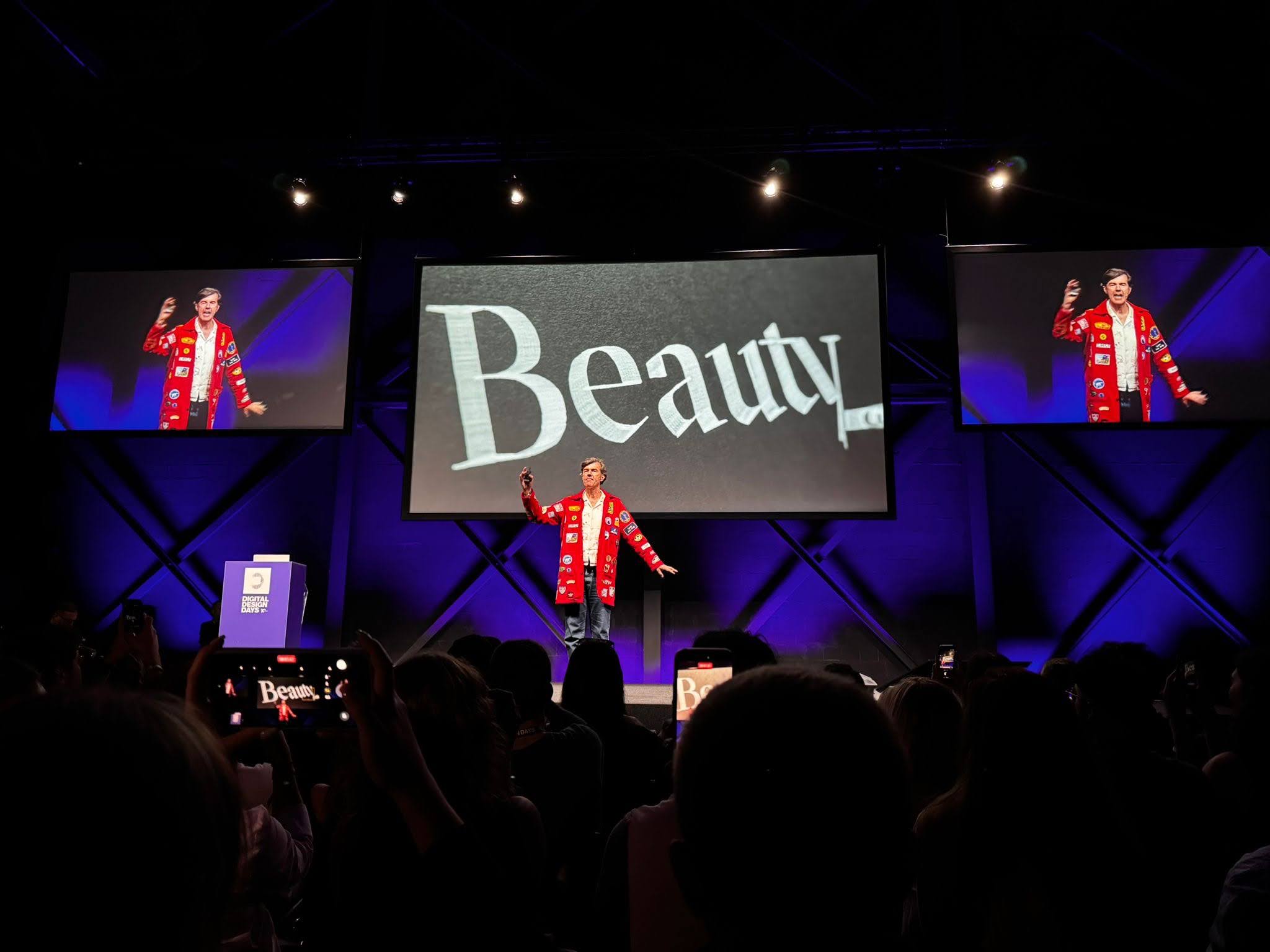
AI was everywhere, but that wasn’t the point
The message that kept surfacing was that generative tools tend towards optimisation: the statistical average of everything that’s already been made. The result is design that is technically flawless and essentially anonymous.
The question bouncing between stages was where the designer actually fits into all this. The most useful answer we took away is that human value lies in deliberately introducing what the algorithm would discard: imperfection, dissonance, the irrational choice that somehow works. Curators of possibilities, with the specific job of giving the tool a limit that makes its output feel like something.
What changes in practice
Concretely, this means redirecting the time that AI frees up towards what still can’t be delegated: building visual identities with their own internal logic, crafting user experiences that don’t feel templated, making design decisions that carry a strategic reason beyond aesthetics.
DDD 2026 confirmed something we already half-knew: tools change quickly, but the ability to give meaning to what you produce remains the actual work. We came back with a clearer sense of where to focus and a few new questions to explore with our clients.
The future of digital design is ready to be written. At COMMpla, we have the tools, the human touch, and the vision to build it with you. Let’s create something unique together.