Fast Assisted Prototyping: Empowering Client Trust Through Real-Time Collaboration
Client engagement during the early stages of a project is often as important as the delivery itself. Initial conversations, requirements gathering and expectation setting lay the foundations for everything that follows. The quality of these interactions shapes the relationship between client and delivery team, helping to build trust from the outset.
When discussing a new digital product, however, communication is rarely straightforward. A client usually has a clear vision in mind, but translating that vision into specifications, diagrams and requirements inevitably involves interpretation. This is why project teams rely on meeting notes, technical documentation and visual artefacts: they help reduce ambiguity and create a shared understanding. Even so, moving from an idea to a common vision often requires several iterations.
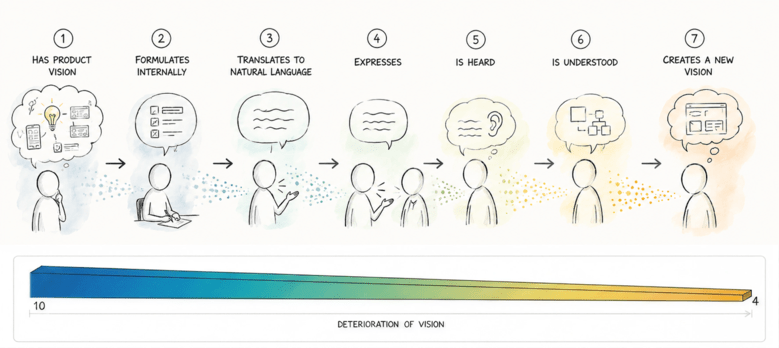
The Power of Visual Prototyping
In this context, visual prototyping can make a meaningful difference. Rather than relying exclusively on written descriptions, teams can create simple interactive prototypes early in the discovery phase, allowing clients to explore concepts, validate assumptions and provide more informed feedback. Even rough prototypes can make discussions more concrete, helping both sides identify misunderstandings before significant development work begins.
Recent advances in AI have made this process more accessible than ever. Today, project managers, developers, consultants and other professionals can use AI-assisted design tools to quickly translate ideas into visual concepts without waiting for fully polished mock-ups. These prototypes are not intended to replace designers or become production-ready deliverables, because, instead, they provide a practical way to support conversations, encourage collaboration and refine ideas from the earliest stages of a project.
If you’re curious to experiment with this approach, a few good practices can help. Start with a clear source of information, such as a project brief, workshop outcomes, a call transcript or a tender document. Take the time to develop your own understanding of the project before using an AI tool to explore possible interfaces or user journeys. Combining written descriptions with reference images, sketches, screenshots or examples from existing products often leads to more useful results. Most importantly, present these outputs for what they are: early prototypes designed to stimulate discussion, not final designs or implementation plans.

Among the available tools, a key recommendation could be to explore solutions such as Figma Make, Claude Design or Lovable. Each offers different strengths, but they all demonstrate how rapidly AI-assisted prototyping is evolving and how it can support the discovery process when used thoughtfully.
As these technologies continue to mature, they are making it easier to transform ideas into something tangible much earlier in a project’s lifecycle. While they are no substitute for design expertise or technical implementation, they can help teams and clients establish a shared understanding sooner, making discussions more focused and collaborative.
At COMMpla we are constantly finding new ways and trying new tools to deliver this approach more efficiently. Overall, we see AI-assisted prototyping as one of several ways to strengthen collaboration and improve communication throughout digital projects. By combining human expertise with emerging technologies, we continue to explore approaches that help clients move from ideas to shared solutions with greater clarity and confidence.
If you would like to learn more about how COMMpla supports organisations in designing and delivering digital products, visit our website or get in touch with our team.
Elio Colligiani | Full-stack Developer