From Ocean Data to the Palm of Your Hand: the VeriFish App Is Live
Two weeks ago, on 3 June 2026, the European Commission announced OceanEye – its flagship initiative to position Europe at the forefront of global ocean observation.
Costas Kadis, European Commissioner for Fisheries and Oceans, put it plainly: “OceanEye is our collective investment in knowledge to unlock the mysteries of our ocean. Understanding the ocean is a key asset; it is also a fundamental economic and geopolitical opportunity for the EU to lead the way in deep tech, research, data collection, and the blue economy.”
That framing matters. It moves ocean data out of the domain of scientific infrastructure and places it at the centre of economic governance – and of everyday decisions. The quality, accessibility and usability of ocean intelligence is not a background condition; it is a determining factor for whether the blue economy can be both competitive and genuinely sustainable.
It is in that context that the launch of the VeriFish app on the Apple App Store and Google Play carries particular meaning.
Developed through the EU-funded VeriFish project, the app is the public-facing outcome of a rigorous assessment of the sustainability profiles of more than 130 seafood species, evaluated across environmental, socio-economic and nutritional indicators.
At a moment when Europe is defining the architecture of its ocean observation system – with the BBNJ Agreement and OceanEye setting the direction for the decade ahead – VeriFish contributes something that sits at the very heart of that agenda: verified, structured data on the species that connect the ocean to our plates, our markets, and our policy choices.
What the app does with that data – and how it does it – is what the rest of this article is about.
A small confession before going any further. When this project started, I decided I would genuinely try to buy fish more sustainably. The first time I did, I stood in front of the supermarket counter for several minutes, phone in hand, unable to find the information I needed. The packaging told me the species, the price and sometimes the country of origin. Everything else was missing. How had it been caught? Was the stock healthy? Were the fishers paid fairly? Was it even the best choice for me?
So, like most people, I turned to the internet. And that’s where the confusion began. A quick search brought up conflicting sources, outdated articles, forum opinions and marketing claims, all saying different things. The problem wasn’t a lack of information, it was an overload of disconnected information. By the end of the search, I felt less informed than when I started.
But dinner still had to be made, so I bought the fish anyway, relying on instinct. Just as most people do.
The idea behind the VeriFish web-app is to take a body of verified data, the VeriFish knowledge base, built across more than 130 seafood species and assessed on environmental, socio-economic and nutritional indicators via the VeriFish indicator framework, and put it, quite literally, in the palm of your hand. No more searching in the dark: you open the app, select the species, and read a clear profile. Not a single sustainability “score” handed down from above, but the dimensions that make it up: the state of the stock, the footprint of the fishing method, the nutritional value, the social conditions behind that fish. No marine biology degree required.
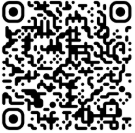
Then there’s a second side, and it may well be the one that matters most. Fishers and producers aren’t just an audience: they can register, enter their own data, and generate a personalised QR code linked to a validated factsheet. For a small operator who has moved into sustainability practices.
This code could be concrete evidence to put into a buyer’s hands.
The app is a prototype, and you’re unlikely to find a VeriFish QR code at the supermarket counter yet.
None of this works by magic. Beneath the friendly interface lies the most important engine of all: a knowledge graph, built on semantic web standards and connected to global references such as the GRSF, which lets fragmented, non interoperable datasets actually talk to one another.
Concretely, the data falls into three families. On the environmental side, you can see how healthy the stock is, how the fishing method affects the seabed, the risk it poses to sensitive or bycatch species, and issues such as lost gear, drawn from sources like the GRSF, FishBase and STECF and summarised through a simple zero-to-five score.
On the socio-economic side, the profile surfaces the human conditions behind the catch, including signals on labour rights, modern slavery risk and governance indicators for the producing country.
And on the biological and nutritional side, you get both the essentials about the species itself, such as its habitat, diet, distribution and more, with nutrient values and a Nutrient Density Score based on EuroFIR’s FoodEXplorer composition data. On the nutritional front allow you can also compare the values of different species and weigh them against common animal products such as beef and chicken, so you can see at a glance what macronutrients you are actually getting and make a more informed choice.
And for anyone who wants to dig in, you can always go deeper and consult the raw data.The latest version of the app goes a step further, integrating MSC (Marine Stewardship Council) certification status into the factsheets, so that verified indicators sit alongside an internationally recognised scheme rather than competing with it.
Europe is building the cathedral of ocean observation: the satellites, the agreements, the deep-tech ambition. VeriFish works on the last mile, that short, stubborn distance between all that knowledge and the moment when someone actually has to choose. That’s where sustainability is quietly won or lost. And for once, now, it fits in your pocket.