The Psychology Behind User Experience: Part 3 – Behavioural and Social Psychology in UX
The Psychology Behind User Experience: Part 3 – Behavioural and Social Psychology in UX
In the final instalment of our series, we’ll explore how behavioural and social psychology shape digital experiences, from habit formation and motivation to community dynamics and trust signals. Used well, these principles help people achieve their goals faster and with less friction. Used poorly, they can drift into manipulative “dark patterns”, so responsible design matters more than ever.
If you’ve missed the first two parts, you can read them here: Part 1 – Cognitive Psychology and UX | Part 2 – Emotional Design.
Behavioural Psychology and UX
Behavioural psychology looks at how actions become habits through cues, rewards and repetition. For UX teams, this is less about “making people addicted” and more about designing reliable, low-effort pathways to value, so users come back because the product genuinely fits their lives.
Designing for habitual use (the right way)
Habit-friendly products tend to share a few traits:
- Clear value in seconds: users quickly understand what they gain.
- Low cognitive load: the next step is obvious, not puzzling.
- Consistent feedback: the product confirms progress and reduces uncertainty.
- User control: notifications, privacy and pacing are adjustable.
Example: Strava (and similar fitness apps)
Goal setting and progress tracking can make exercise feel measurable and motivating. When users can see milestones, streaks or training trends, they’re more likely to return because the app supports a real-world habit. Social elements (sharing activities, kudos, friendly challenges) can add positive reinforcement, provided they’re opt-in and don’t create unhealthy pressure.
Techniques that increase retention (without crossing the line)
The Hook Model (Trigger → Action → Reward → Investment)
Popularised by Nir Eyal, the Hook Model describes a loop that can reinforce repeated behaviour: a trigger prompts an action, which leads to a reward, followed by an investment that increases future commitment.
Example: Instagram notifications
Notifications can act as triggers, prompting a quick action (opening the app). Engagement (likes, comments, messages) becomes a reward, and creating content or curating a feed can count as investment, making return visits more likely.
Design tip: make triggers useful, not noisy. Defaults matter: offer granular notification controls, and avoid “nagging” patterns that frustrate users.
Variable rewards
Variable rewards are compelling because they’re unpredictable: not every interaction pays off the same way, which can increase repeated checking behaviour. This effect is closely linked to variable reinforcement schedules in behavioural psychology.
Example: Social feeds
A feed that mixes new posts, popular posts and personal updates can feel different each time and it encourages users to “just check quickly”.
Design tip: unpredictability can boost engagement, but it can also undermine wellbeing. Use it to add delight (surprising value), not to obscure information, manufacture urgency, or make it hard to stop.
A quick note on responsible persuasion
Regulators and consumer bodies are paying closer attention to interfaces that distort choice through deceptive layouts, pressured consent flows, or misleading urgency cues. In the EU, the Digital Services Act includes provisions aimed at manipulative interface design (“dark patterns”) on online platforms.
In the UK, the CMA has also focused on potentially harmful “online choice architecture”.
A simple rule of thumb: if a design would feel unfair when explained plainly to a user, it probably needs rethinking.
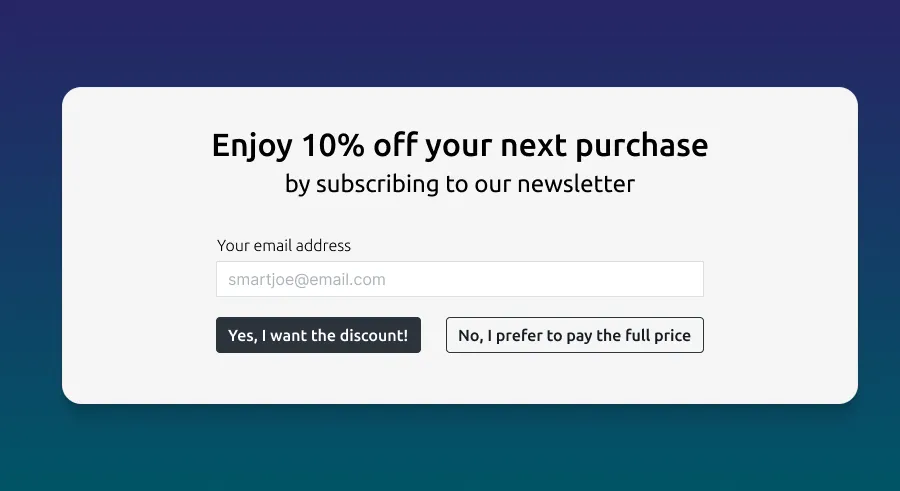 An example of a confirmshaming dark pattern: the opt-out is worded to make users feel guilty for declining
Social Psychology in UX
Social psychology studies how people influence (and are influenced by) others. In digital products, it underpins trust, community, identity, and the subtle cues that guide decisions.
Social proof and feedback signals
Reviews, ratings, testimonials, user counts and “most popular” labels can reduce uncertainty and help users decide faster.
Example: Amazon reviews
Prominent ratings and detailed reviews help shoppers assess risk and build confidence through other people’s experiences.
Design tip: credibility beats hype. Make signals verifiable (e.g., “verified purchase”), explain sorting logic, and avoid burying negative feedback that users deserve to see.
Designing for social interaction
Well-designed social features can turn a tool into a workplace, a platform into a community, and a product into a shared habit.
Example: Slack
Channels, threads and direct messages support coordination and belonging, especially when norms are easy to understand (who posts where, what a channel is for, what “good” looks like).
Design tip: community doesn’t happen by accident. Provide lightweight governance tools: onboarding prompts, templates, moderation controls, and clear reporting pathways.
Case studies: social principles in action
- LinkedIn endorsements and recommendations: social proof builds perceived credibility and encourages reciprocal participation (endorse me, I’ll endorse you).
- Facebook Groups: shared identity and belonging drive repeat engagement, particularly when groups have clear purpose and active moderation.
Applying social psychology to drive meaningful engagement
User-generated content (UGC)
UGC can increase engagement because users aren’t just consuming: they’re contributing.
Example: YouTube
Creator tools, discovery surfaces and monetisation options incentivise production, while viewers return for fresh content.
Design tip: reduce barriers to contribution (templates, drafts, prompts) and reward quality (clear guidelines, constructive feedback loops).
Gamification and leaderboards
Points, badges and challenges can motivate users by tapping into progress, competition and social recognition.
Example: Fitbit challenges
Friendly competition can help people stay consistent, especially when participation is opt-in and comparisons feel fair.
Design tip: avoid “one-size-fits-all” leaderboards. Consider personal bests, small cohorts, or tiered goals so beginners aren’t discouraged.
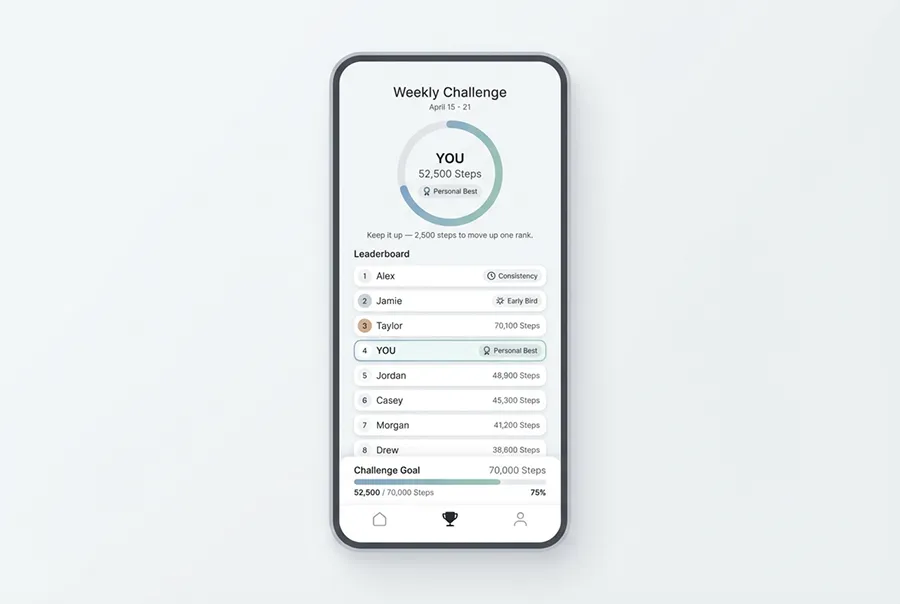 Gamification in UX: a friendly leaderboard and progress cues can boost motivation through social recognition and achievable goals.
Conclusion
Behavioural and social psychology offer powerful, practical tools for UX teams, helping users build routines, make confident decisions, and connect with others. The best products don’t rely on gimmicks: they create real value, clear feedback, and respectful choice. So people return because it works for them, not because it tricks them.
Thank you for following us in this 3-part journey into the psychology of UX!
If you’d like to apply these principles to your product, we can help: from UX audits and funnel optimisation to community features, onboarding flows and retention strategies designed for long-term trust. Contact us!